

Getting Your Garage Gym Ready for a Canadian Winter
A garage gym is a great place to train, until the first deep freeze. Winter brings three problems: cold that stiffens rubber and upholstery, condensation that rusts bare steel, and road salt that rides in on boots and cars. An hour of preparation now saves you from pitted bars and seized bolts in March.
The short version
- Moisture is the real enemy, more than cold. Control it with a dehumidifier and keep wet cars and boots away from your gear.
- Wipe, brush and lightly oil your bars, and keep weights off bare concrete.
- Bring cardio machines indoors. Electronics and belt lubricant don't like freezing garages.
Why winter is hard on equipment
Rust needs moisture, and in a garage that moisture often comes from condensation. When a mild, damp day follows a cold night, warm air meets steel that is still cold and leaves a film of water on it. Melting snow from a parked car adds even more humidity. Bars, plate holes, bolts and guide rods are where it shows first.
1. Control the moisture
- Run a dehumidifier if your garage stays damp. A cheap hygrometer shows the humidity; aim for about 50% or below. In an unheated garage, choose a model made for low temperatures: desiccant dehumidifiers keep working in the cold, while standard ones lose most of their effect.
- Keep the car away from the gym when you can. If you park inside, set up on the far side and use a tray or mat to catch meltwater.
- Check the seals on the garage door and close gaps that let snow blow in.
2. Protect your barbells and bare steel

- Wipe the bar after every session. Sweat and chalk hold moisture against the steel.
- Brush the knurling with a stiff nylon brush every week or two.
- Oil it lightly. A thin coat of light machine oil on the shaft and sleeves every few weeks keeps moisture out. Wipe off the excess.
- Store bars on a rack or J-hooks, not leaning on a concrete wall or floor.
Chrome resists rust but isn't immune to it. Once surface rust starts it can pit the finish, so prevention is far easier than removal.
3. Get plates and dumbbells off the concrete

Bare concrete stays cold and damp, so weights left on it sweat and rust. Keep plates on storage posts or a rack, dumbbells on a dumbbell rack, and everything else on a mat. Wipe off rust spots on iron plates and touch up chipped coating so bare metal stays covered.
Rubber gets harder and less forgiving in deep cold, so avoid dropping rubber-coated weights on a frozen floor.
4. Look after benches and pads
Bench upholstery stiffens in the cold and can crack if it is folded or flexed hard while frozen. Wipe pads after training, cover them if the garage is dusty, and on very cold days let the space warm up before heavy use.
5. Bring cardio machines inside
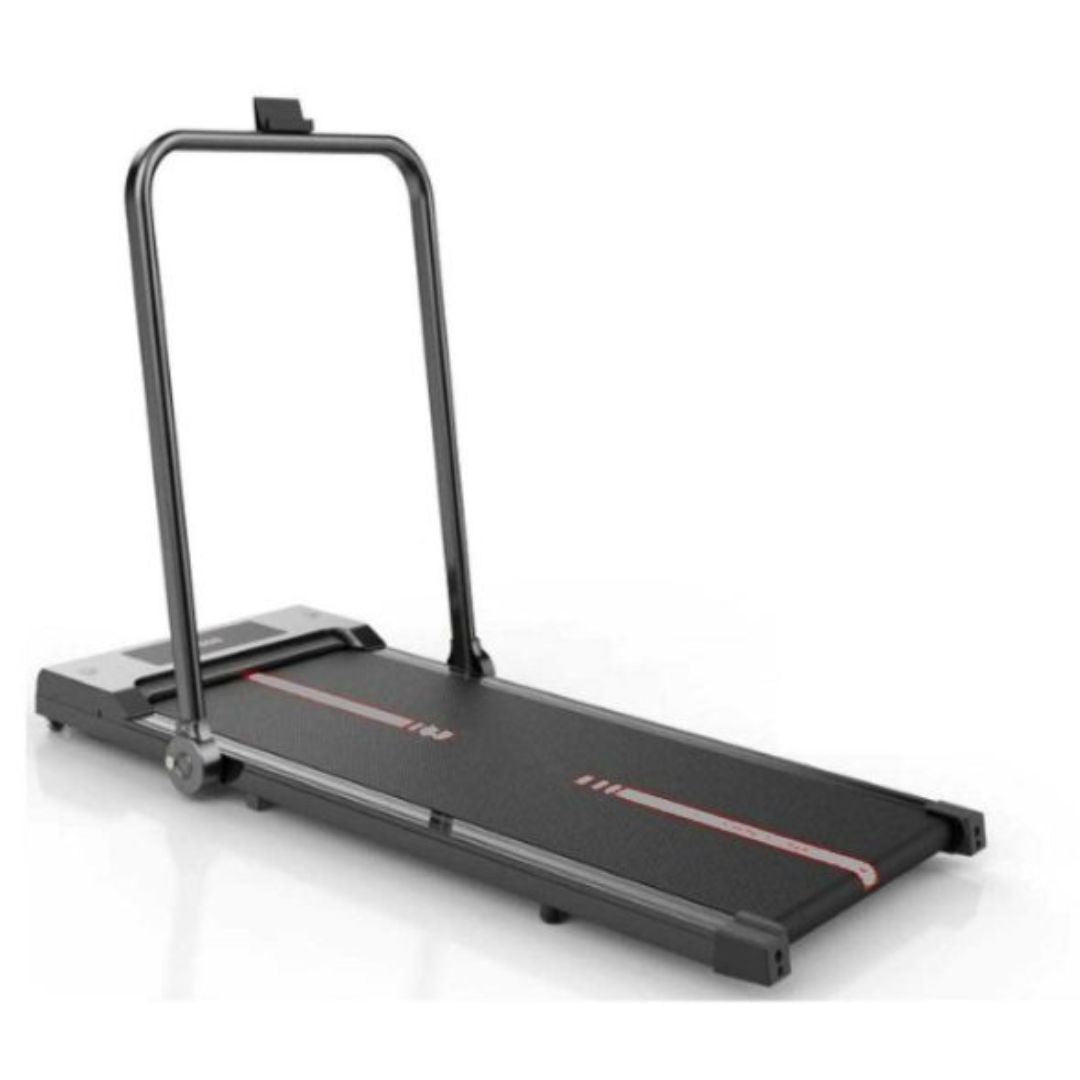
Treadmills, walking pads and exercise bikes have electronics, motors and belt lubricant, and most manuals call for indoor use in a dry room at normal temperatures. In a freezing garage the lubricant stiffens, and condensation can form on the electronics as the machine warms up.
If a cardio machine has been in the cold, let it reach room temperature before you switch it on. Better still, move it into the house for the winter. Our Walking Pad Z1 weighs 44 lb and slides under a bed or sofa, and the Folding Treadmill X2 folds to 48 × 20 × 26 in.
6. Check the hardware
Big temperature swings make steel expand and contract, and bolts can work loose over a season. Once a month, check the bolts on your rack, Smith machine and benches, and tighten any that have backed off. Wipe the guide rods on a Smith machine, lubricate as the manual describes, and look over cables for fraying.
7. Insulate the floor

Rubber flooring protects the concrete and puts a layer between you and the cold slab. Hard gym mats go under racks, benches and dumbbell storage, and interlocking foam tiles are warmer underfoot for stretching and floor work. Keep a boot tray by the door so salty slush never reaches your mats. More in Hard Gym Mats vs Interlocking Foam Tiles.
8. Heat safely and warm up longer
- Use an electric heater rated for garages, keep it well away from mats, foam and cardboard, and never leave it running unattended.
- Never run a propane or kerosene heater in a closed garage. They produce carbon monoxide.
- Warm up longer than usual. Cold muscles and a cold bar make the first sets feel harder, so add a few lighter sets before your working weight.
Your winter checklist
| When | What to do |
|---|---|
| After every session | Wipe bars, handles and pads, and put weights back on racks |
| Weekly | Brush the bar knurling, check the hygrometer and empty the dehumidifier |
| Monthly | Oil bars lightly, check and tighten bolts, and inspect cables and pulleys |
| Once a season | Check door seals, touch up chipped plates and move cardio machines indoors |
Questions about a specific piece of equipment? Contact us and we'll help.


